
1. Executive Summary
Fuel quality control sits at the intersection of safety, compliance, and operational discipline. It is also one of the most manually managed and inconsistently documented functions in aviation operations today.
Across airports, FBOs, and fuel service providers, critical inspections are still tracked using paper logs, binders, spreadsheets, and disconnected systems. While inspections are often performed with care, documentation frequently relies on individual habits, institutional memory, or delayed data entry. These methods introduce risk not because teams lack diligence, but because the systems supporting them were never designed for scale, turnover, or sustained regulatory scrutiny.
As regulatory expectations increase and operations grow more complex, documentation gaps have become a leading source of audit findings and compliance exposure. In many cases, organizations know inspections occurred but cannot reliably demonstrate when, how, or by whom they were completed. In high-risk environments, the inability to produce verifiable records is functionally equivalent to non-compliance.

At the same time, the aviation industry is undergoing a broader digital transformation. Inspection workflows, data capture, and record retention are moving out of binders and into systems designed for real-world field conditions. Modern approaches emphasize time-stamped records, asset-specific attribution, offline capability, centralized visibility, and long-term data integrity. These changes are not about convenience. They are about reducing risk, improving accountability, and creating defensible compliance.
This white paper examines why traditional fuel quality control processes fail under pressure, outlines the operational requirements of modern fuel operations, and presents a practical framework for digitizing inspection workflows without disrupting field execution. Drawing from real-world deployments, industry standards, and protected workflow design, it provides a clear view into how leading operators are strengthening compliance while supporting day-to-day operations.
The objective is not to introduce more process. It is to protect the process already in place by making it consistent, verifiable, and resilient over time.
2. The Reality of Fuel Quality Control Today
Fuel quality control is a critical safety function, yet in many aviation operations it is still managed with tools and processes that have changed little in decades. Paper logs, binders, spreadsheets, and informal workarounds remain common across airports, FBOs, and fuel service providers. These methods persist not because teams are resistant to improvement, but because they are familiar, inexpensive, and perceived as “good enough” when everything goes right.
In practice, fuel inspections are often completed under time pressure, in challenging environments, and across rotating shifts. Documentation is frequently recorded by hand, transcribed later, or stored across multiple locations. Photos may live on personal devices. Logs may be filed inconsistently or archived without a reliable indexing system. When experienced personnel leave or roles change, continuity depends on tribal knowledge rather than a standardized process.
This creates a gap between what operations believe is happening and what can be demonstrated after the fact. Teams may be confident inspections are being performed, yet struggle to retrieve records quickly or prove consistency over time. During audits, incident reviews, or internal investigations, the issue is rarely whether inspections occurred. The issue is whether they can be verified clearly, completely, and without delay.

Fuel quality control is also uniquely vulnerable to documentation breakdowns because it spans people, equipment, locations, and time. A single operation may manage daily, weekly, and monthly inspections across multiple assets, often with limited centralized visibility. Paper-based systems make it difficult to identify trends, spot missed inspections, or intervene before small lapses become systemic issues.
As operations scale, this fragility compounds. What worked for a single location or a small team becomes harder to manage across dozens of sites and hundreds of personnel. Audits become disruptive rather than routine. Compliance becomes reactive rather than embedded. The risk is not obvious day to day, but it accumulates quietly.
The reality is that many fuel operations are performing the right work with the wrong infrastructure. The inspections themselves are not the weak point. The systems used to document, retain, and validate them are.
This gap between operational intent and documented proof is where most compliance exposure lives today.
3. Why Traditional Compliance Breaks Under Pressure
Traditional fuel quality control systems are built around the assumption that inspections are static, predictable, and easy to document after the fact. In reality, fuel operations operate in dynamic environments where conditions change quickly and margins for error are narrow. Paper-based compliance methods fail not because inspections are misunderstood, but because they are misaligned with how work actually happens.
Most legacy processes separate the act of inspection from the act of documentation. Fuelers perform checks in the field, often under time pressure or environmental constraints, and then record results later. This gap introduces risk. Details are forgotten. Forms are completed from memory. Handwritten notes become illegible. Photos are stored on personal devices or not captured at all. Over time, the record becomes a reconstruction rather than a reflection of reality.

Fuel operations are not isolated from the broader digital transformation reshaping aviation. Across safety, maintenance, dispatch, and inventory management, paper-based processes are being replaced by systems designed to capture data at the point of work and make it immediately usable. Fuel quality control is following the same trajectory, driven by rising regulatory expectations, operational complexity, and the need for defensible records.
This shift is not about convenience or modernization for its own sake. It is a response to structural weaknesses in legacy compliance methods. As audits become more data-driven and organizations operate across more locations, the tolerance for fragmented documentation continues to shrink. Regulators increasingly expect records that are complete, time-bound, and traceable across assets and personnel. Operators are expected to demonstrate not only that inspections occurred, but that they occurred correctly, consistently, and in accordance with defined procedures.
4. The Industry Shift Toward Digital Inspection Frameworks
Fuel operations are not isolated from the broader digital transformation reshaping aviation. Across safety, maintenance, dispatch, and inventory management, paper-based processes are being replaced by systems designed to capture data at the point of work and make it immediately usable. Fuel quality control is following the same trajectory, driven by rising regulatory expectations, operational complexity, and the need for defensible records.
This shift is not about convenience or modernization for its own sake. It is a response to structural weaknesses in legacy compliance methods. As audits become more data-driven and organizations operate across more locations, the tolerance for fragmented documentation continues to shrink. Regulators increasingly expect records that are complete, time-bound, and traceable across assets and personnel. Operators are expected to demonstrate not only that inspections occurred, but that they occurred correctly, consistently, and in accordance with defined procedures.

Digital inspection frameworks address this by collapsing the gap between action and documentation. Inspections are logged as they are performed, not reconstructed later. Records are time-stamped, associated with specific assets and users, and supported by visual evidence where appropriate. Offline-first capability ensures that work can be completed in real-world field conditions without sacrificing data integrity. When connectivity is restored, records sync automatically, preserving continuity without manual intervention.
Equally important is visibility. Digital systems make it possible for supervisors and leadership to see inspection activity across locations in near real time. Missed checks, emerging trends, and recurring discrepancies surface early, when they can still be addressed with coaching or process adjustments rather than corrective action. Compliance shifts from reactive to embedded.
This evolution also reflects a workforce reality. Newer generations entering fuel operations expect digital tools that guide their work, reduce ambiguity, and reinforce correct behavior. Clear, structured workflows reduce reliance on institutional memory and make onboarding more consistent. Instead of learning what is expected through trial and error, personnel learn through the system itself.
The most effective digital frameworks go beyond simple form replacement. They are designed around how operations actually function. They account for shift changes, variable conditions, and the need to capture context alongside results. They integrate inspection data with related operational information, creating a more complete picture of performance over time.
The industry is moving from recordkeeping to operational intelligence. Inspections are no longer isolated events documented after the fact. They are data points within a continuous operational loop that supports safety, accountability, and decision-making.
This shift sets a new baseline. As digital inspection frameworks become more common, the question for fuel operations is no longer whether paper can work, but whether it can withstand the expectations placed on modern, high-risk operations.
5. What Modern Fuel Operations Require
As fuel operations adapt to higher expectations around safety, compliance, and accountability, incremental fixes are no longer sufficient. Modern operations require systems that are designed for scale, scrutiny, and real-world execution. The difference between legacy tools and effective digital frameworks is not the presence of technology, but the alignment between system design and operational reality.
Modern fuel operations require standardized inspection logic across locations and shifts. Inspections should follow the same structure regardless of who is performing them or where they are completed. This consistency reduces variation, reinforces expectations, and makes performance comparable across sites. When inspection logic lives in people’s heads or on locally modified paper forms, consistency erodes quickly.
They require documentation captured at the point of work. Inspections must be recorded as they occur, not recreated later. Time-stamped entries, asset-specific records, and user attribution are essential to establishing credibility. Visual evidence, such as photos, adds context and reduces ambiguity when questions arise. Together, these elements turn inspections into verifiable records rather than informal attestations.
Modern operations need offline-capable workflows that function in field conditions.
Fuelers cannot depend on reliable connectivity in all environments. Systems must support offline execution without compromising data integrity, then synchronize automatically when connectivity returns. This removes the incentive to delay or bypass documentation when conditions are imperfect.
Leadership requires real-time visibility and early warning signals. Supervisors should be able to see whether inspections are being completed, where performance is slipping, and which assets or locations require attention. Trend data and exception tracking allow teams to intervene early, shifting compliance from a periodic audit exercise to an ongoing operational discipline.
Modern fuel operations require long-term, audit-ready record retention. Records must be easy to retrieve months or years later, without manual searching or reconstruction. Clear labeling, structured storage, and centralized access turn audits from disruptive events into routine processes. Long-term retention is not only a regulatory expectation but a safeguard against turnover and organizational change.
Systems must support accountability without friction. Effective workflows guide users through required steps, reduce guesswork, and reinforce correct behavior without adding unnecessary burden. When systems are intuitive and aligned with how work is performed, adoption increases and compliance becomes part of daily operations rather than an added task.
Taken together, these requirements define a new baseline for fuel quality control. They reflect an understanding that compliance is not achieved through intention alone, but through systems that make the right behavior the easiest behavior.
Operations that meet these requirements are better equipped to scale, adapt, and withstand scrutiny. Those that do not may appear compliant until pressure is applied. The difference becomes clear when audits occur, incidents are reviewed, or leadership asks for proof.
The next section examines how these requirements translate into measurable outcomes by looking at evidence from real-world deployments across diverse fuel operations.
6. Evidence from the Field
Multi-Site Into-Plane Operations
At organizations operating across dozens of locations, consistency is the primary challenge. Paper-based systems make it difficult to know whether inspections are being completed uniformly, especially when teams span regions, shifts, and experience levels.

In multi-site environments like PrimeFlight, digital inspection workflows have enabled leadership to monitor performance across stations in near real time. Instead of discovering gaps during audits or after incidents, support teams can identify slippage early and intervene with training or guidance. Inspection completion rates, once invisible, become actionable signals.
This visibility fundamentally changes how quality control is managed. Compliance shifts from a retrospective exercise to a living operational process. Audits become faster and less disruptive because records are already complete, organized, and accessible. In PrimeFlight’s case, the majority of audit requirements are now handled electronically, replacing multi-day manual preparation with on-demand reporting.
Smaller Facilities with Growing Complexity
Smaller operations face a different challenge. As requirements increase, paper systems become harder to maintain and harder to explain. Documentation sprawl creates friction during audits and undermines confidence, even when inspections are being performed correctly.
At facilities like Swissport, moving away from binders and loose forms created immediate operational clarity. Digital workflows introduced structure where there had previously been a “free-for-all,” breaking responsibilities into clear, repeatable tasks across shifts. Discrepancy logs encouraged more thorough inspections by prompting detailed observations instead of rushed checkmarks.
The impact becomes most visible during audits and investigations. Swissport reported multiple instances where historical records dating back several years were requested. Previously, retrieving that information would have been nearly impossible. With digital records, documentation was accessed quickly and confidently, presenting auditors with clearly labeled, organized files instead of stacks of binders. Long-term electronic storage supported five to seven years of compliance history without added administrative burden.
Common Outcomes Across Operations
Despite differences in size and scope, the outcomes are consistent:
- Clearer ownership of daily inspections and tasks
- Reduced reliance on memory and informal workarounds
- Faster, cleaner audit preparation
- Improved confidence among auditors and leadership
- Stronger training and onboarding through guided workflows
- Greater professionalism in how operations present themselves externally
These results are not driven by additional effort from the field. They are driven by systems that make correct execution and documentation inseparable. Inspections are no longer events that must be proven later. They are records that stand on their own.
The evidence from the field reinforces a central point: when fuel quality control is supported by workflows designed for real operational conditions, compliance stops being fragile. It becomes durable.
7. Innovation, IP, and Process Protection
Digital inspection tools are increasingly common, but most focus on digitizing forms rather than protecting the integrity of the inspection process itself. Wingware took a fundamentally different approach. Instead of asking how to capture inspection data, the platform was designed around how to preserve procedural compliance, sequence integrity, and evidentiary continuity under real operational conditions.
This design philosophy is formalized and protected through Wingware’s issued U.S. patents, which cover not a single feature, but an integrated system and process for jet fuel equipment and procedure quality control.
From Recordkeeping to Process Enforcement
At the core of Wingware’s patented architecture is the idea that inspection integrity depends on how inspections are guided, executed, and stored, not simply that they are completed.
The patented system defines inspection workflows at the equipment level. Each asset type is associated with a specific inspection process, inspection frequency, and required data inputs. When an inspection is initiated, the system retrieves the correct procedure for that asset and presents a guided, step-by-step workflow to the inspector. This ensures inspections follow the correct sequence every time, regardless of location, shift, or experience level.
Crucially, the system is designed so inspections are performed through the workflow, not documented afterward. Inputs are captured during execution, time-stamped, attributed to a specific user, and associated directly with the equipment being inspected. This closes the gap between action and documentation that undermines traditional compliance systems.

Preventing Retroactive Manipulation
One of the most significant risks in paper-based and loosely digitized systems is the ability to alter records after the fact. Wingware’s patented process addresses this by controlling how inspection data is created, stored, and carried forward. Inspection reports are generated as part of the workflow and stored centrally. When repeat inspections occur, the system can prepopulate prior failed values until corrective action is documented, creating continuity rather than allowing issues to be silently reset. This design discourages superficial pass-through behavior and reinforces accountability over time. The result is a record that reflects operational reality, not retrospective cleanup.Sensor-Aware, Context-Rich Compliance
The patents also cover integration with sensors and visual evidence. Inspection workflows can incorporate sensor data such as pressure readings or differential values, and inspections can be triggered automatically when sensor thresholds or trends indicate potential issues. Visual documentation captured through integrated cameras becomes part of the inspection record itself, not an external attachment. This capability adds context to compliance. Inspections are no longer isolated checklists but responses to actual equipment behavior, strengthening both safety outcomes and audit defensibility.Audit-Ready by Design
Wingware’s patented system also supports remote and real-time audit capabilities, including spot audits initiated without advance notice. Auditors can select locations, equipment, and time windows, and monitor inspection completion as it happens. Records generated through these processes are immediately available for review, eliminating the scramble traditionally associated with audits. This is not an add-on feature. It is a direct consequence of a system designed from the outset to support verification, traceability, and long-term record retention.Why This Matters
These patents do not protect a user interface or a reporting dashboard. They protect a method of ensuring compliance integrity in environments where failure carries significant risk. For fuel operations, this means:- Inspections that are executed consistently, not interpreted individually
- Records that are defensible years later, not reconstructed under pressure
- Accountability that is built into the workflow, not enforced after the fact
- Compliance systems that scale with operations rather than breaking under them
8. Jet Fuel QC® as an Operational Framework
Rather than treating inspections as standalone tasks, Jet Fuel QC® structures fuel quality control as a continuous operational system. Equipment, inspection procedures, personnel, and documentation are linked together so that compliance is executed, recorded, and validated as a single process. This approach reflects the reality that fuel quality control is not an event, but an ongoing discipline.
At the equipment level, inspections are tied to specific assets and governed by predefined procedures and frequencies. This ensures that inspections are consistent regardless of who performs them or where they occur. At the personnel level, inspectors are guided through standardized workflows that reduce ambiguity and reinforce correct execution without relying on institutional memory.
Jet Fuel QC® also addresses one of the most persistent weaknesses in traditional systems: visibility. Supervisors and leadership gain insight into inspection activity across locations without disrupting field operations. Completion rates, trends, and discrepancies are surfaced early, allowing teams to intervene before small issues escalate into compliance findings.
Importantly, the platform is designed for the environments in which fuel operations actually take place. Offline capability supports inspections in areas without reliable connectivity. Automatic synchronization preserves data integrity without adding administrative burden. Visual evidence and contextual data strengthen records without slowing down the field.
The result is a system where compliance is not something proven after the fact. It is something that exists by default.
Jet Fuel QC® does not replace operational discipline. It protects it. By aligning inspection execution, documentation, and oversight within a single framework, the platform allows fuel operations to scale safely, withstand scrutiny, and adapt to evolving expectations without adding complexity.
This is why Jet Fuel QC® functions as infrastructure rather than a point solution. It is the practical implementation of the principles outlined throughout this paper.
9. Conclusion and Path Forward
Fuel quality control has always been a cornerstone of aviation safety. What has changed is the environment in which it operates. Increased regulatory scrutiny, distributed operations, workforce turnover, and growing data expectations have exposed the limits of paper-based and fragmented compliance systems. The risks facing fuel operations today are less about whether inspections are performed and more about whether they can be proven, validated, and sustained over time.
As this paper has shown, documentation failures are rarely isolated incidents. They are symptoms of systems that were never designed for scale, continuity, or scrutiny. When inspections are disconnected from documentation, visibility is limited, and accountability depends on individuals rather than infrastructure, compliance becomes fragile.
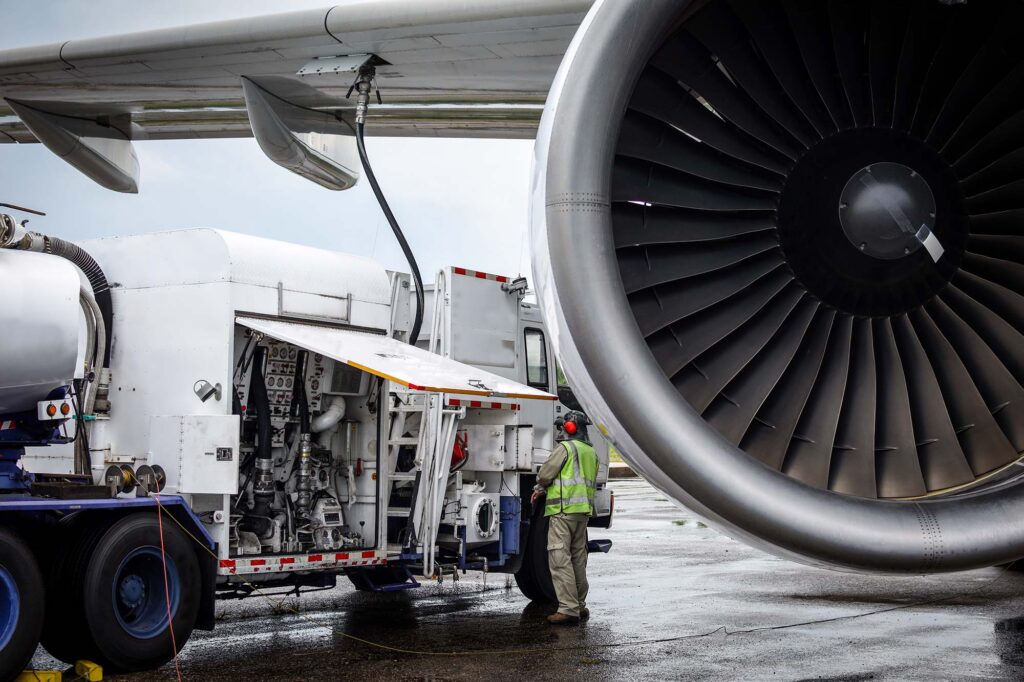
The industry response is already underway. Digital inspection frameworks are redefining how fuel quality control is executed, shifting compliance from a reactive obligation to an embedded operational discipline. Organizations that adopt systems aligned with real-world conditions gain earlier insight, stronger audit outcomes, and greater confidence in their ability to manage risk.
Wingware’s approach reflects this shift. By designing and protecting inspection workflows that enforce procedural integrity, preserve evidentiary continuity, and support field execution, Jet Fuel QC® establishes a durable foundation for fuel quality control. The platform does not add layers of oversight. It integrates compliance into daily operations in a way that scales naturally as organizations grow.
For fuel operations evaluating their current state, the question is no longer whether digital tools are necessary. It is whether existing systems are capable of withstanding the expectations placed on modern aviation infrastructure.
The path forward is clear. Operations that invest in resilient, verifiable compliance frameworks reduce risk today and position themselves for the demands of tomorrow. Those that rely on legacy methods may appear compliant until pressure is applied.
Raising the standard for fuel quality control is not about changing what teams do. It is about strengthening the systems that support them.